The outcome is only the beginning.
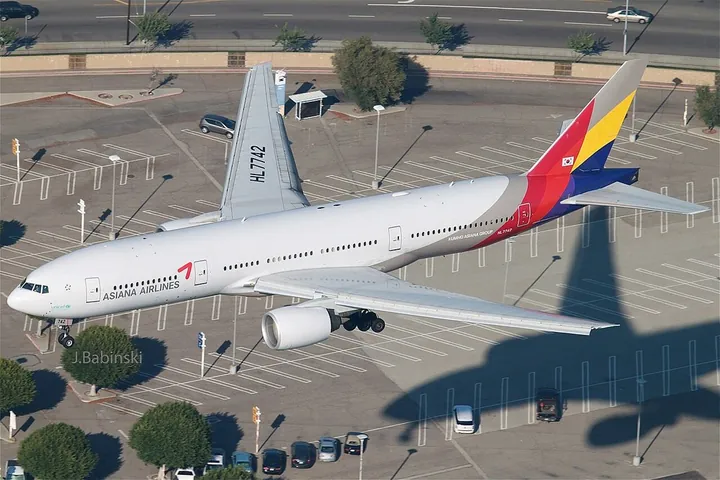
The aircraft struck the seawall during landing at San Francisco; NTSB examined approach management and automation understanding. [1]
Make mode changes visible and verify that crews can identify and recover from unstable approaches.
What the system was trying to do.
Complete a stable approach and landing.
The assumption beneath the promise
Museum hypothesis to examine: People will infer the true physical state and automation mode from the information available under stress. This is an analytical proposition to test against the record, not an attributed statement by the organization.
Success should be assessed against the intended service and its safety, reliability, or integrity constraints. A headline outcome cannot tell us whether those constraints were visible, tested, or owned before the event.
A sequence, not a single moment.
The intended system
Complete a stable approach and landing.
Source-backed synopsisThe event or review
The aircraft struck the seawall during landing at San Francisco; NTSB examined approach management and automation understanding. [1]
Source-backed synopsisThe documented aftermath
Investigators recommended improvements in training and flight-deck systems. [1]
Source-backed synopsisWhat could be seen at the time?
Airspeed fell below the desired approach speed without timely recovery. [1]
Who could see it?
See the cited investigation for named teams and the information they held. The synopsis does not infer awareness by every stakeholder.
Why was it not enough?
Signals need interpretation, authority, and a route to action. This is an analytical question, not proof that a warning was deliberately ignored.
Choices made within constraints.
Museum analysis: Training needed to align the crew’s mental model with actual automation modes.
Available alternatives
Pause, test, narrow the operating envelope, seek independent review, or build a recovery option. These are proposed analytical alternatives; feasibility at the time is not established.
Information available
Airspeed fell below the desired approach speed without timely recovery. [1]
Incentives & constraints
Delivery pressure, cost, authority, and incomplete knowledge may shape a decision. Their specific weight is not established by this synopsis.
Risk accepted
Ask whether the relevant risk was recognized, who had authority to accept it, and whether affected people understood its implications.
How conditions connected.
Select a node to inspect its evidence. Links show a proposed analytical relationship, not a measured causal effect.
The aircraft struck the seawall during landing at San Francisco; NTSB examined approach management and automation understanding. [1]
Beyond the immediate event.
Passengers died and many people were injured. [1]
Categories identify documented or relevant consequences. Financial, human, and environmental totals are not estimated here when the source base does not support them.
More than one lens.
Swiss Cheese Model
Harm can pass through gaps in multiple defenses: organizational influences, supervision, preconditions, and active failures.
In this case, use the lens to examine human-system interaction. This application is museum interpretation, not a finding of the original investigation.
Limit: A useful lens, not proof of a universal linear cause. Barriers interact and change over time.
FMEA
Identify failure modes, their effects, and controls before or during system development.
In this case, use the lens to examine human-system interaction. This application is museum interpretation, not a finding of the original investigation.
Limit: Lists can miss interactions and unanticipated operating conditions; scores are not exact probabilities.
Systems thinking
Examine relationships, boundaries, feedback, and incentives across a whole system.
In this case, use the lens to examine human-system interaction. This application is museum interpretation, not a finding of the original investigation.
Limit: A broad lens needs explicit boundaries and evidence to avoid explaining everything after the fact.
What could have changed the outcome?
Counterfactuals are hypotheses. They identify possible intervention points without claiming that a different choice would certainly have prevented the event.
Test the operating envelope
Exercise realistic boundary conditions and shared dependencies rather than validating components only in isolation.
Cost & feasibility
Requires time and independent review before commitment.
Likely effectiveness
May reduce exposure or consequences. Not quantified; feasibility and effect must be assessed against evidence available at the time.
From hindsight to a usable practice.
Make mode changes visible and verify that crews can identify and recover from unstable approaches.
Before accelerating hiring or spending, name the assumptions that remain untested and set evidence thresholds for the next commitment.
Recovery is another investigation.
Investigators recommended improvements in training and flight-deck systems. [1]
A corrective action is evidence of a response; it is not, by itself, evidence that the wider pattern has disappeared.
Follow the record.
Documented claims are linked to sources. Analytical applications, lessons, and intervention proposals are museum interpretation. This draft does not establish motives or a single complete causal explanation.
- 1ntsb.gov — Asiana Airlines case record
Official investigation · Accessed 4 October 2026
Editorial history & limits
Version 1 · 4 October 2026 — source-backed illustrative synopsis created. Independent editorial review is pending. No claim of exhaustive investigation. New sources may alter the analysis.